The Evolution of E-Commerce: Adapting to Changing Consumer Paradigms

Traditional electronic commerce operated on a remarkably linear model: users navigated a rigid taxonomy of categories, applied static filters, and completed a standardised checkout sequence. This deterministic user journey, whilst functional for desktop-centric web structures, is wholly inadequate for contemporary consumer expectations. Digital commerce requires a transition from rigid, feature-driven layouts to highly adaptive, intent-based experiences.
Contemporary consumers do not merely seek a repository of items; they demand immediate, friction-free context. This behavioural shift is rooted in the ubiquity of mobile interfaces and the integration of multimodal inputs, such as voice commands and visual search. Consequently, the modern e-commerce interface must quieten cognitive noise. The aesthetic standard has shifted decisively toward functional minimalism, wherein the layout suppresses non-essential assets to ensure that product validation and conversion pathways remain uncompromised.
Architectural Velocity as a Core UX Metric
In traditional design discourse, user experience was frequently limited to visual presentation and interactive feedback. Today, technical performance stands as the bedrock of successful interface strategy. The correlation between systematic latency and shopping cart abandonment is definitive.
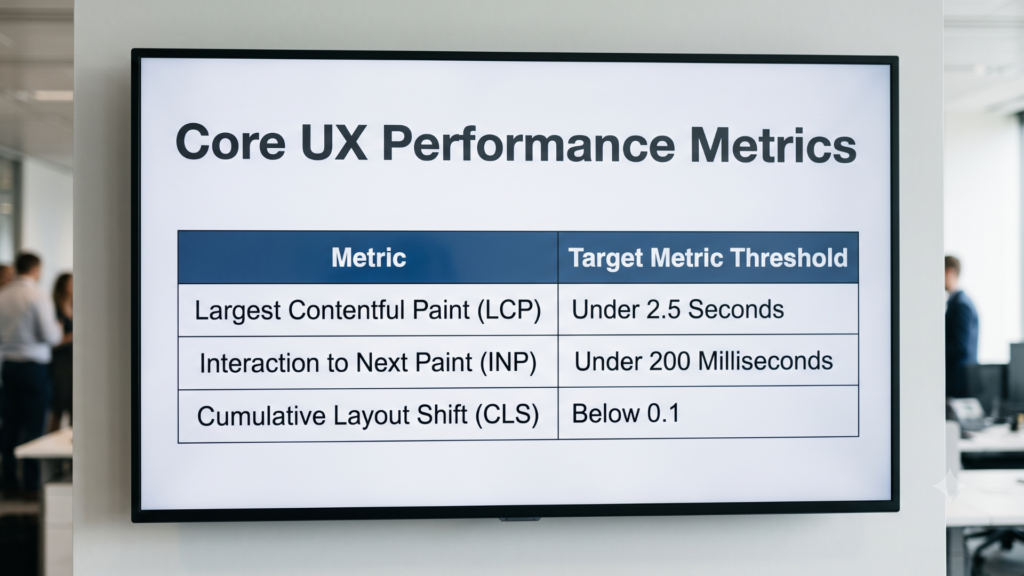
When an interface fails to stabilize rapidly, or delays interactive registration, user trust erodes instantly. This issue is compounded by the rise of headless and composable commerce architectures, which separate the presentation layer from backend logic. The interface must be engineered to exploit these decoupled systems, rendering crucial data blocks dynamically without causing layout instability. Performance is no longer a purely engineering concern; it is a vital user experience determinant.
Designing for Intent and Agentic Interaction

The most profound paradigm shift currently reshaping digital commerce is the introduction of machine-to-machine interactions, commonly referred to as agentic commerce. Interfaces are no longer constructed exclusively for human sight and manual input. Automated procurement agents, large language models, and web crawlers regularly scan platforms to verify stock levels, cross-reference pricing metrics, and assess return conditions before a human user ever views the page.
This shift changes the rules of presentation layer design. High-fidelity layouts must be accompanied by impeccable, highly structured semantic data. If an automated agent cannot instantly parse shipping lead times or warranty parameters due to unstructured layout architecture, the platform is excluded from the choice matrix. For human interactions, this translates into a demand for conversational search utilities and dynamic, self-assembling interfaces that serve real-time user intent rather than forcing compliance with a pre-determined funnel.
Interface Modernization Checklist
To remain competitive within this evolving framework, digital design teams must execute a rigorous optimization programme across key functional zones.
1. Intent-Driven Discovery & Search
- Replace standard keyword search bars with natural language processing inputs capable of understanding complex contextual intent.
- Implement predictive autocomplete systems powered by behavioural telemetry, prioritizing exact matches over generic algorithmic assumptions.
- Ensure absolute typo tolerance using sophisticated distance algorithms, maps, and synonym pairings to eliminate dead-end search results.
2. Mobile-First Ergonomic Refinement
- Enforce single-column user flows utilizing progressive disclosure to prevent data density fatigue on smaller displays.
- Position all primary call-to-action components within the lower seventy per cent of the view screen to guarantee comfortable thumb accessibility.
- Mandate a minimum interactive target size of 44 by 44 pixels, adhering strictly to established human interface guidelines.

3. Frictionless Checkout Engineering
- Reduce form field collection to absolute essentials, utilizing automated address completion via spatial geolocation application programming interfaces.
- Present comprehensive, unbending breakdowns of shipping fees, handling costs, and tax estimates before the final checkout step commences.
- Integrate flexible, one-click payment frameworks alongside modern digital wallets to negate the necessity of manual card entry.
4. Trust and Structural Legibility
- Embed verified customer testimonials and user-generated media directly adjacent to primary call-to-action elements to foster immediate validation.
- Eliminate automated, multi-frame image carousels which impair screen-reader accessibility and elevate cognitive load.
- Incorporate functional dark mode options to limit visual fatigue and ensure strict compliance with accessibility contrast standards.

Conclusion
The evolution of electronic commerce is defined by a relentless drive toward friction reduction, structural transparency, and immediate relevance. As the boundaries between physical intent and digital execution continue to blur, the storefront must evolve from a passive catalogue into an intelligent, high-performance utility. Success belongs to organisations that view design not as superficial embellishment, but as a disciplined system of optimization capable of satisfying both human users and automated agents with equal precision.