Book a UX Call
Category

Category: Uncategorized

Uncategorized

Designing for the Modern Enterprise: Aligning B2B Platforms with B2C Expectations

July 25, 2026 4 min read

As the modern workforce increasingly expects professional software to mirror the seamless usability of consumer applications, modern B2B platforms must evolve beyond functional density to deliver intuitive, user-centric experiences. Rather than removing necessary operational complexity, forward-thinking systems abstract it through progressive disclosure, role-based information architecture, unified search, and consistent design systems validated by rigorous UX research. Ultimately, aligning enterprise tools with consumer expectations transforms clunky workflows into a distinct competitive advantage, delivering measurable business returns by shortening onboarding times, reducing support overhead, minimizing human error, and driving long-term platform retention.

Read article →
"A modern, clean workspace featuring a computer monitor surrounded by floating UI/UX design elements like color palettes, typography scales, and interface wireframes, representing the strategic design process required to build trust and authority in a competitive digital market."
Uncategorized

Strategic Branding: Cultivating Emotional Resonance in Competitive Digital Markets

July 18, 2026 4 min read

This article examines how visual identity shapes brand perception in crowded digital markets, arguing that emotional resonance often forms before a single word is read. It breaks down the roles of typography, grid structure, and color theory as core tools that quietly project a brand's values and personality, from the warmth of rounded fonts to the discipline suggested by a consistent grid to the trained emotional response built through repeated color use. The piece emphasizes that these elements only reach their full strength when working together as one coordinated system, rather than as isolated design choices. It concludes that in markets where products and features are easily copied, a well built visual identity creates something far harder to replicate: a genuine feeling of trust and familiarity that turns first time visitors into loyal, returning customers.

Read article →
Uncategorized

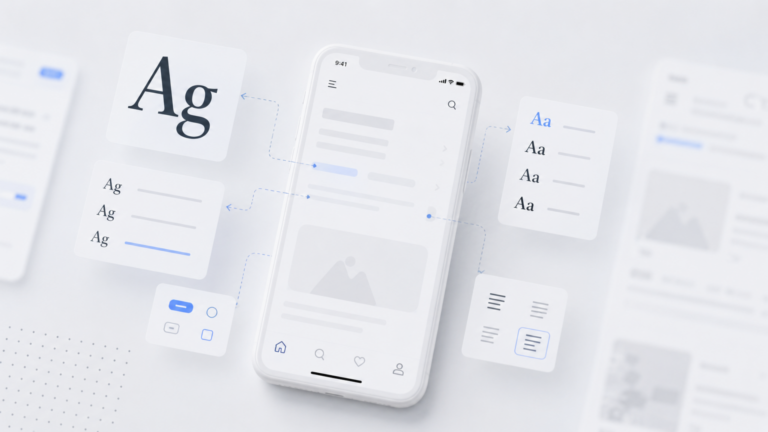
The Typography of Usability: How Type Selection Directs Digital Navigation

July 16, 2026 5 min read

The article emphasizes that typography is a fundamental usability tool rather than a mere aesthetic choice, arguing that thoughtful type selection is essential for guiding digital navigation, reducing cognitive load, and driving conversions. By establishing a clear visual hierarchy through strategic sizing, spacing, and contrast, designers can effectively direct user attention and build trust. Furthermore, the piece highlights that effective typography requires careful responsiveness to ensure legibility across diverse screen sizes, noting that these design decisions not only enhance the user experience but also positively impact SEO performance. Ultimately, the author suggests that typography should be treated as critical site infrastructure, requiring expert judgment to ensure a website performs reliably and intuitively across all devices.

Read article →
Uncategorized

Omnichannel Strategy: Creating Seamless Transitions Across Digital Touchpoints

July 11, 2026 4 min read

Consumers today rarely complete a journey on a single device. They discover a product on mobile, compare it on desktop, get reminded by a smartwatch, and check out on a tablet — often within the same hour. An omnichannel strategy is the discipline of designing every touchpoint so that context, progress, and personalization carry over seamlessly between them, rather than resetting with each switch. For FinTech, e-commerce, and B2B SaaS brands, this isn't a nice-to-have UX polish — it's a direct lever on conversion rates, KYC completion, and customer retention. This article breaks down how modern consumers actually move across desktop, mobile, and wearable devices, where most brands lose them mid-journey, and the practical UX principles that keep transitions frictionless.

Read article →
Uncategorized

The Pitfalls of Over-Engineering: Maintaining Simplicity in Complex SaaS Products

July 4, 2026 4 min read

Over-engineering driven by unchecked feature creep is a leading, underdiagnosed cause of SaaS user churn. It breaks down how complexity accumulates gradually through cluttered settings, redundant workflows, and edge-case features, and why removing features requires more discipline than adding them. It closes with a five-point framework (protecting the core job, treating additions as subtraction candidates, validating with data, designing for median users, and regular pruning) that SaaS teams can use to maintain simplicity as products scale, positioning purposeful design as a retention strategy rather than a cosmetic choice.

Read article →
Uncategorized

Safeguarding Corporate Assets: The Crucial Importance of Full IP Ownership in Design Partnerships

June 11, 2026 6 min read

Corporate enterprise value is increasingly defined by proprietary technology and digital architecture. When commissioning external digital product agencies, many corporate leaders overlook contractual vulnerabilities regarding intellectual property retention. Restrictive usage licences often result in severe vendor lock-in, inflated operational costs, and diminished corporate valuations during critical due diligence or acquisition phases. To mitigate these material risks, enterprises must secure absolute, unencumbered ownership of all custom assets, design systems, and source code. Onyx UX Studio addresses this systemic industry challenge by structuring transparent, client-centric contracts that guarantee complete intellectual property transfer, thereby safeguarding corporate digital infrastructure.

Read article →

Latest from the Onyx UX Blog

View all articles →