Book a UX Call
Tag

Tag: #AI

UX

The Psychology of Decision-Making: Strategic UX Patterns that Guide User Action

July 21, 2026 4 min read

Behavioral economics reveals that people rarely make purely rational choices online- they rely on mental shortcuts, emotions, and context, which is why thoughtful UX design matters so much. The article explores how strategic patterns like progressive disclosure, smart defaults, and anchoring form an ethical "choice architecture" that simplifies decisions without manipulating users. It highlights visual hierarchy as a way to reduce decision fatigue, social proof as a trust-building tool at key conversion points, and emotional design elements (tone, color, micro-interactions) as quiet influences on whether an experience feels trustworthy or frustrating. The piece draws a clear line between ethical persuasion and manipulative "dark patterns," arguing that transparency builds lasting user trust rather than just short-term gains. Ultimately, it frames Onyx Digi's design philosophy as one that treats user psychology not as a persuasion tactic, but as a responsibility- building interfaces that genuinely support the people using them.

Read article →
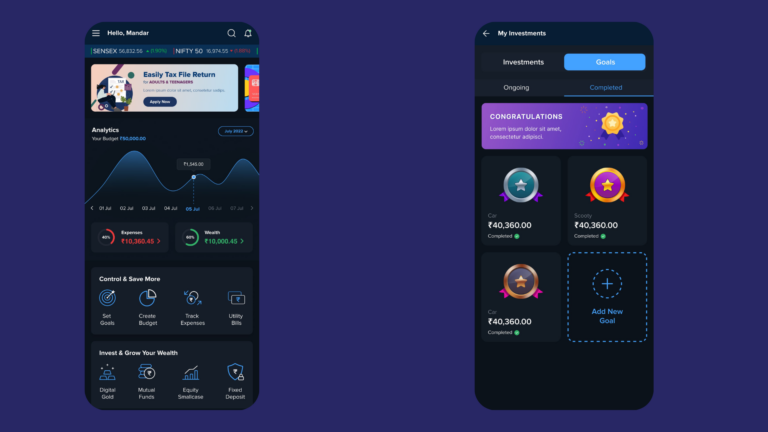
Two mobile app screens showcasing a dark-themed fintech interface side-by-side. The left screen displays a comprehensive home dashboard featuring a market ticker, a promotional banner for tax filing, a dynamic line chart for budget analytics, expense versus wealth tracking rings, and categorized quick-action icons for budgeting and investing. The right screen presents a 'My Investments' interface focused on the 'Goals' tab, displaying a celebratory banner and gamified achievement badges—such as bronze, silver, and gold medals—for completed financial milestones like purchasing a car and a scooty, along with a dashed card to add a new goal.
Arabic UX

Why FinTech UX Design Is the Real Key to Faster SAMA & DFSA Approval

June 20, 2026 4 min read

The perceived trade-off between regulatory compliance and user conversion is a myth that frequently stalls product launches. Treating regulations as an afterthought often leads to rejected designs and rebuilt KYC flows, stretching launch timelines from three months to nearly a year. However, by adopting a regulatory-native approach to FinTech UX design, founders can embed pre-vetted compliance patterns from day one, accelerating approvals from bodies like SAMA and the DFSA to just 2–3 weeks. This strategy is especially critical in GCC markets, where an Arabic-first localization process and clear, Shariah-compliant interfaces turn upfront disclosures into powerful trust signals rather than points of friction. Ultimately, designing for transparency proves that regulatory requirements are actually growth levers, with real-world data showing that clear, progressive disclosures significantly boost user engagement and conversion rates.

Read article →

Latest from the Onyx UX Blog

View all articles →