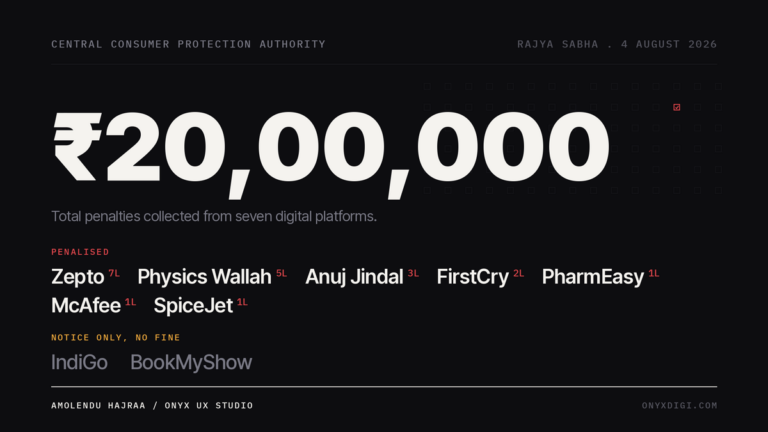
Twenty lakh rupees is what deception currently costs in India
On 4 August, in a written reply to the Rajya Sabha, the Minister of State for Consumer Affairs put a number on India's first real enforcement drive against dark patterns. Twenty lakh rupees. Split across seven companies. That is about twenty three thousand dollars, which is less than most of those companies spend on a single week of performance marketing. I want to start with a correction, because the headlines got this wrong and I would rather be accurate than fast. Nine platforms were named in that reply. Seven were fined. Two of them, IndiGo and BookMyShow, received notices, fixed their screens, and paid nothing. The version that travelled across timelines was "nine platforms penalised." That is not what happened, and the difference matters if you are one of the two.
Read article →